You Already Paid Taxes on Your S Corp Profits. Why Could Your Distribution Still Be Taxable?
 Certified CFO
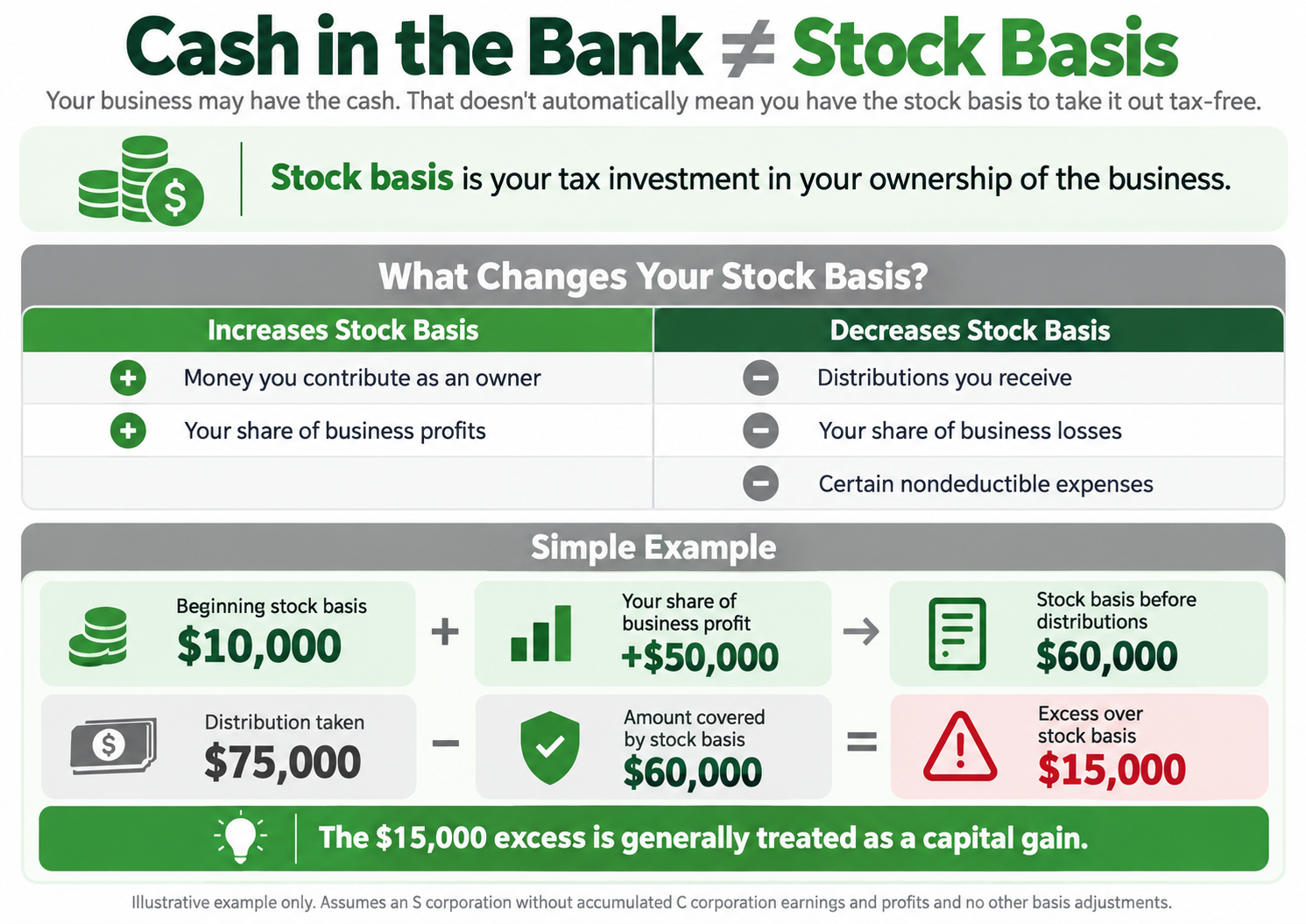
Your business may have the cash. That doesn't mean you have the stock basis to take it out tax-free.
At a recent tax continuing education class, two important IRS compliance concerns came up: reasonable compensation and shareholder basis. We covered reasonable compensation in our previous article. Now let's tackle shareholder basis—because this one can catch business owners by surprise.
"If I've already paid taxes on my business profits, why would I owe taxes when I take money out?"
The answer starts with understanding something called stock basis.
Illustrative stock-basis example; actual basis calculations depend on individual circumstances.
First, You're a Shareholder—even if You Own the Whole Business
When you own an S corporation, your ownership is represented by shares of stock. That doesn't mean your company is traded on Wall Street. It's simply how ownership in a corporation is represented.
If you own 100% of your S corporation, you own all the shares. That makes you a shareholder.
Stock basis is the tax term for your investment in that ownership. It generally starts with what you paid or contributed to acquire your shares, then changes as your business operates.
Your share of business profits and money you contribute as an owner generally increase stock basis. Distributions, business losses, and certain nondeductible expenses generally decrease it.
Your stock basis is NOT your business bank account balance. Your company could have $100,000 in the bank without having $100,000 of stock basis available for a tax-free distribution.
A Simple Example: How Basis Changes
Imagine you own 100% of an S corporation. You begin the year with $10,000 in stock basis. Your company earns $50,000 in pass-through profit. That profit increases your basis even if you leave the cash in the business.
| Step | Amount |
|---|---|
| Beginning stock basis | $10,000 |
| Plus pass-through business profit | $50,000 |
| Stock basis before distributions | $60,000 |
This is a simplified illustration with no other basis adjustments.
What Exactly Is a Distribution?
A distribution is money or property your corporation transfers to you because you're an owner. It's different from your W-2 paycheck, which compensates you for work performed. A distribution generally isn't a deductible business expense.
S corporation shareholders generally pay income tax on their allocated pass-through net profit whether or not the business distributes the money. Profit and distributions are two different things.
Suppose you take $75,000 in distributions while your available stock basis is $60,000. The first $60,000 is generally tax-free. The extra $15,000 is generally treated as a capital gain.
A capital gain is a type of taxable income often associated with investments. If you've owned the stock for more than a year, the excess distribution generally receives long-term capital gain treatment.
The takeaway: your business may have the cash, but that doesn't automatically mean you have enough stock basis to take it out tax-free.
What Is IRS Form 7203?
Form 7203—S Corporation Shareholder Stock and Debt Basis Limitations—is an IRS form introduced for tax years beginning in 2021. The underlying basis rules are much older. The form provides a more consistent way to calculate and document basis.
Generally, shareholders file Form 7203 when they receive a non-dividend distribution; claim certain S corporation losses; dispose of S corporation stock; or receive repayment of a loan they personally made to the corporation.
Think of it as a tax record that helps answer: 'How much basis do I have, and what tax consequences follow?' Your Schedule K-1 gives your tax professional important information, but it does not independently establish your complete stock and debt basis.
Even when you don't have to file Form 7203, maintaining the calculation each year helps prevent surprises. Tracking basis is ultimately the shareholder's responsibility.
"My CPA Told Me to Make It a Loan Instead."
Sometimes an owner wants to take more cash than their stock basis supports and hears: 'Just record it as a shareholder loan.' That phrase needs clarification.
A corporation can genuinely lend money to its shareholder. But a real loan includes a real obligation to repay, appropriate documentation, interest considerations, and repayment behavior. A bookkeeping label by itself does not turn a withdrawal into a loan.
Compare two situations: (A) You take a $15,000 distribution in excess of stock basis; that excess generally creates a $15,000 capital gain. (B) Your corporation genuinely loans you $15,000; you now owe that amount back under a real loan arrangement.
If there's no actual intent to repay, or the balance is simply left indefinitely without genuine loan treatment, the IRS may challenge the characterization. And recognizing a capital gain may sometimes be more appropriate than creating a debt you never intend to repay.
One more distinction: when you personally lend money TO your corporation, that may create debt basis that supports certain loss deductions. When the corporation lends money TO you, it does not give you debt basis. Debt basis cannot be used to make an otherwise taxable non-dividend distribution tax-free.
Three Questions to Ask Before a Large Withdrawal
1. What is my current stock basis—not just the company's bank balance?
2. Is this payment wages, a shareholder distribution, or a genuine loan?
3. Will this withdrawal create taxable capital gain or another tax consequence?
These are questions to ask before moving the money, not after year-end.
Understanding Your Business Shouldn't Require a Tax Degree
You don't need to memorize Form 7203. You should understand why your tax professional asks about profits, losses, contributions, distributions, and loans—and why the correct treatment matters.
At Home Time Business Services, we believe understanding your numbers leads to more intentional financial decisions. Your business may have the cash. That doesn't automatically mean you have the stock basis to take it out tax-free.
Want to better understand your S corporation's tax position? Schedule a Right Fit Call with Home Time Business Services.
Read the Other Articles in This Series
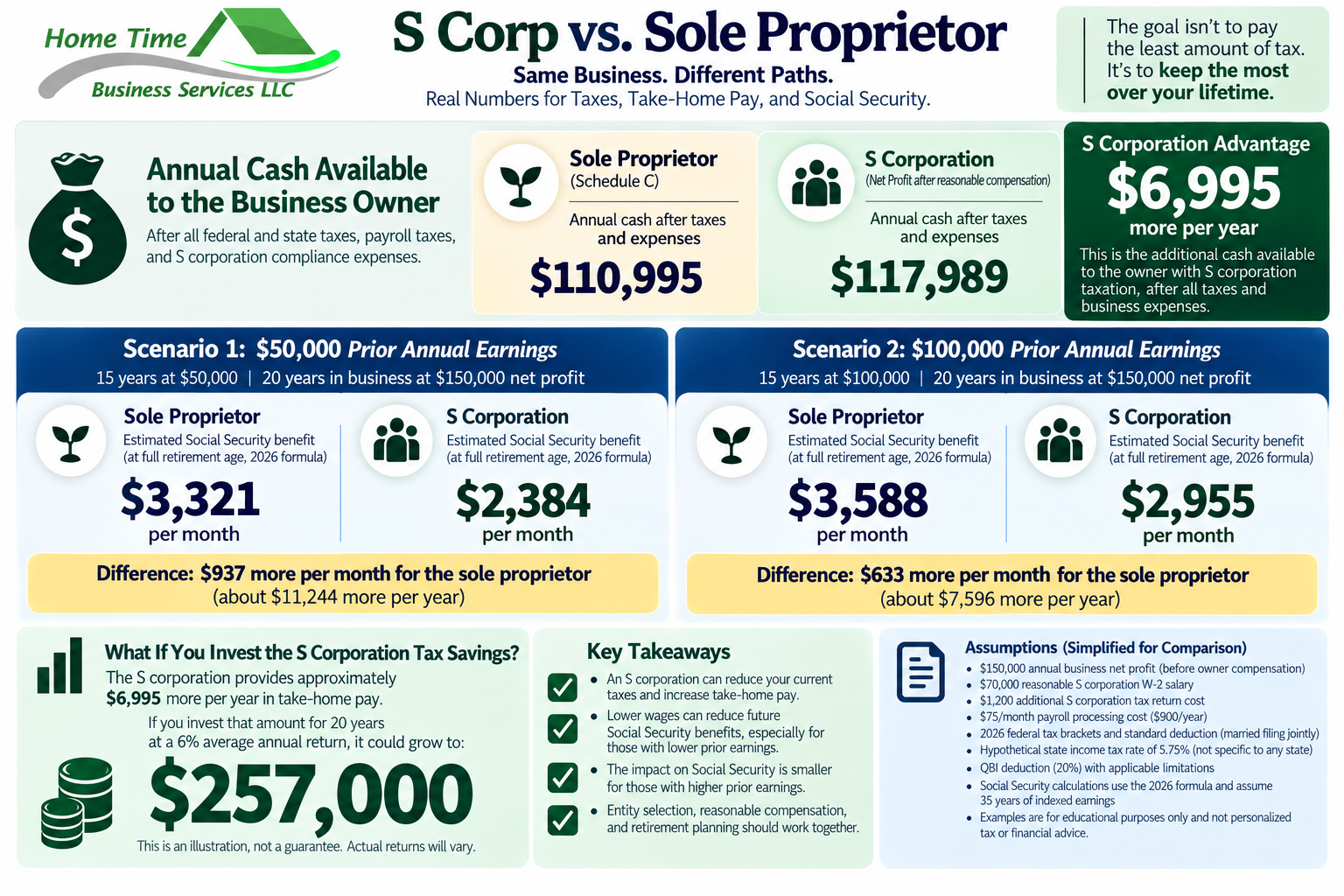
- Article #1 — S Corp vs. Sole Proprietor: Social Security and Retirement
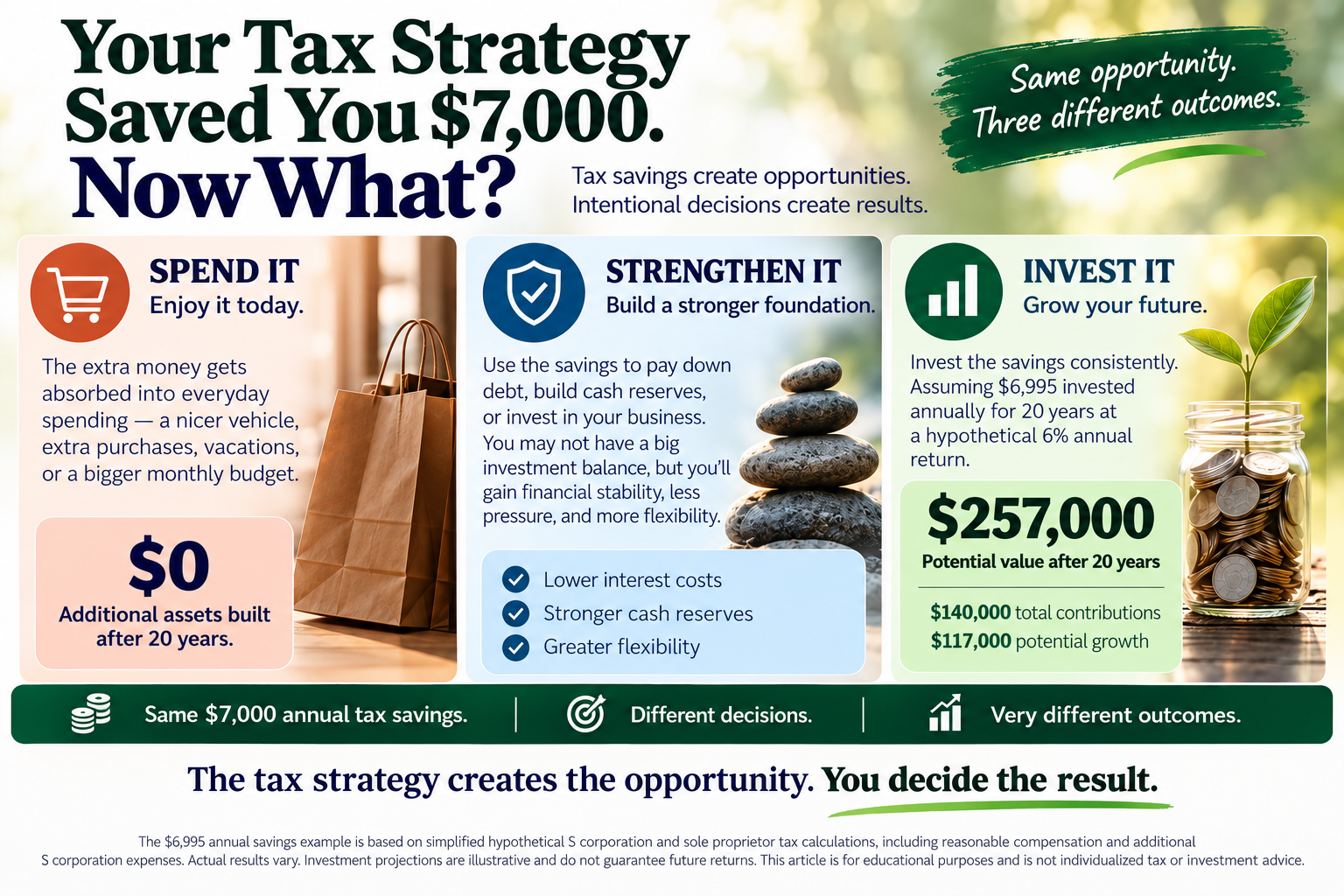
- Article #2 — Your Tax Strategy Saved You $7,000. Now What?
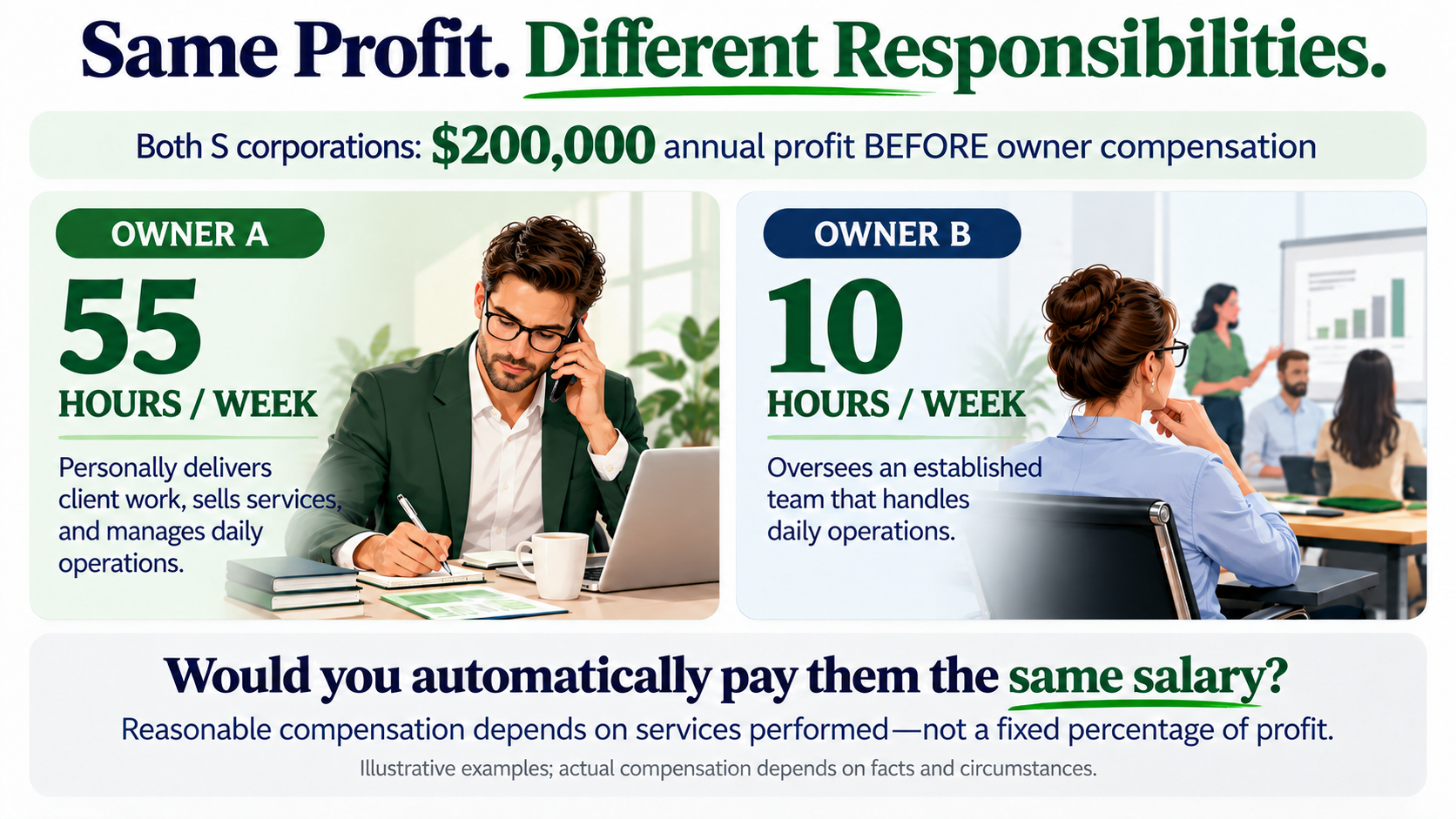
- Article #3 — S Corporation Owners: Is Your Salary Reasonable—or Just Convenient?
IRS Resources
Educational disclaimer: Examples are simplified and assume ordinary non-dividend distributions from an S corporation without accumulated C corporation earnings and profits, and no other stock-basis adjustments. Actual calculations and loan treatment depend on specific facts and tax rules. This is not individualized tax or legal advice.
Tags: