S Corporation Owners: Is Your Salary Reasonable—or Just Convenient?
 Certified CFO
The IRS doesn't have a magic percentage. Your compensation should reflect the work you actually do.
At a recent tax continuing education class, two important IRS compliance concerns came up: reasonable compensation and shareholder basis.
Both deserve the attention of S corporation owners. We're giving each topic its own discussion. Today, let's focus on reasonable compensation.
"How little can I pay myself and still satisfy the IRS?"
It's tempting to begin there. S corporation pass-through net profit generally isn't subject to Social Security and Medicare employment taxes. Lower W-2 wages can seem like an easy tax-saving strategy.
But the IRS doesn't have a magic salary percentage. A convenient number isn't the same as reasonable compensation.
The IRS Doesn't Have a 60/40 Rule
You may have heard that an S corporation owner should take 60% as wages and 40% as distributions—or that every owner can use the same $40,000 salary.
Neither is an IRS safe harbor. Reasonable compensation depends on the services you actually provide, your time and responsibilities, relevant market compensation, and how the business earns its revenue.
The IRS considers whether receipts are generated through the shareholder's services, other employees' services, or capital and equipment. Management work also has value, even if someone else delivers the product or service.
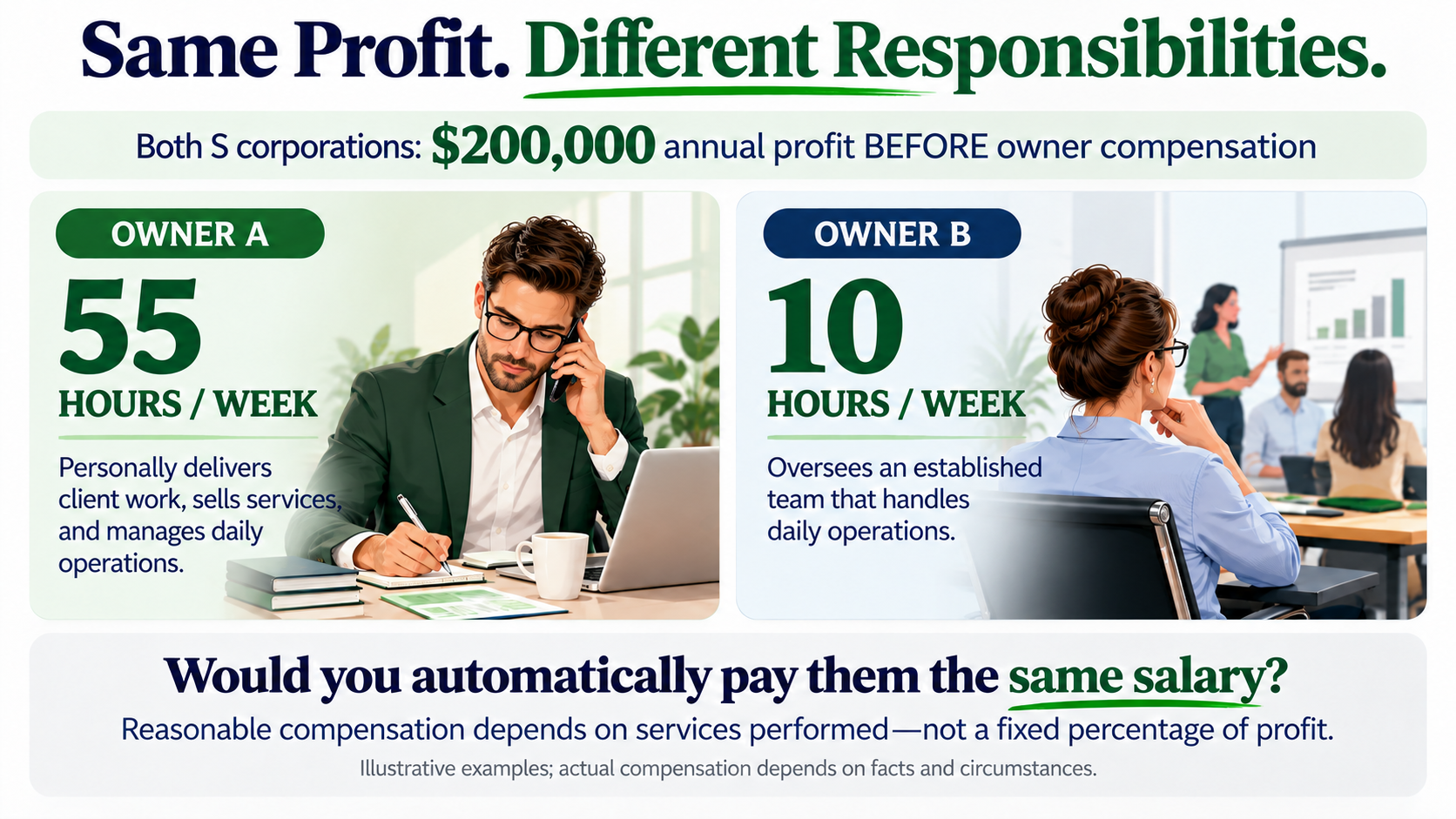
Same Profit. Different Responsibilities.
Imagine two S corporations, each earning $200,000 before owner compensation.
Owner A works 55 hours per week, personally serving clients, making sales, and managing operations.
Owner B works 10 hours per week overseeing an established team that handles most daily operations.
Would you automatically pay them the same salary? Of course not. The actual work—not a percentage of profit—should drive the analysis. Hours alone don't settle it, either: the type and value of the services matter.
Same profit. Different responsibilities.
Wages, Pass-Through Net Profit, and Distributions Are Not the Same
W-2 wages compensate shareholder-employees for services and generally carry employment taxes.
Pass-through net profit is the shareholder's allocated share of taxable S corporation earnings. It is generally reportable for income-tax purposes whether or not cash is distributed.
Distributions are transfers of cash or property to shareholders. They are not automatically wages, and their income-tax treatment depends in part on stock basis.
Simply labeling money a "distribution" does not prevent the IRS from treating it as wages when it represents compensation for services.
Could You Defend the Salary You Chose?
Ask a practical question: What would it cost to hire someone to do the work you perform?
Account for all your hats—technical work, sales, supervision, administration, and strategy—and the time devoted to each.
A reasonable compensation study documents those responsibilities, relevant comparison data, and why the selected salary makes sense. Revisit it as your role or the business changes.
The objective isn't the lowest salary you can get away with. It's a compensation decision you can explain and support.
The Bigger Decision
Compensation also affects Social Security covered earnings and can affect retirement-plan contributions. A salary may be supportable under tax rules without being the best choice for your wider financial goals.
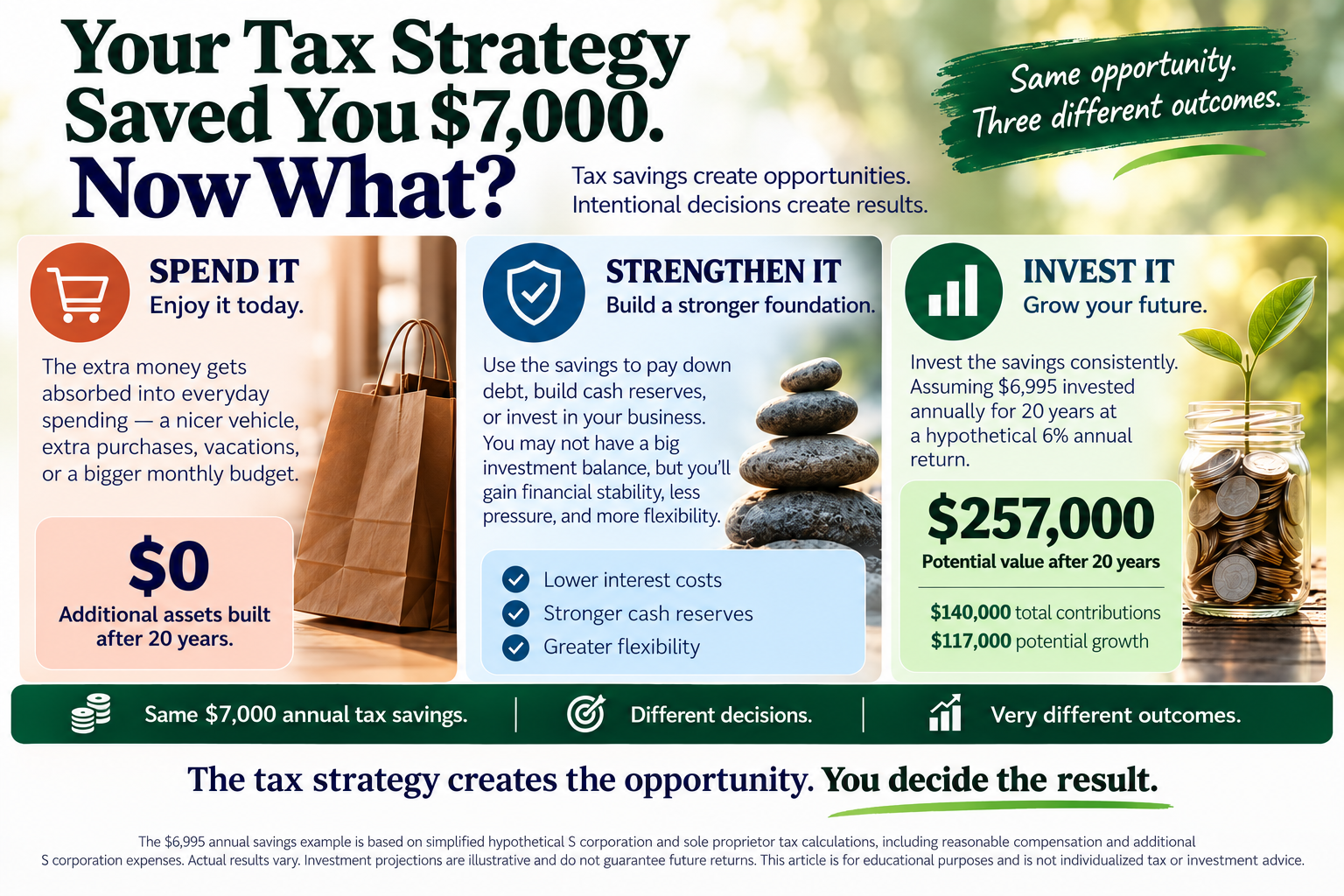
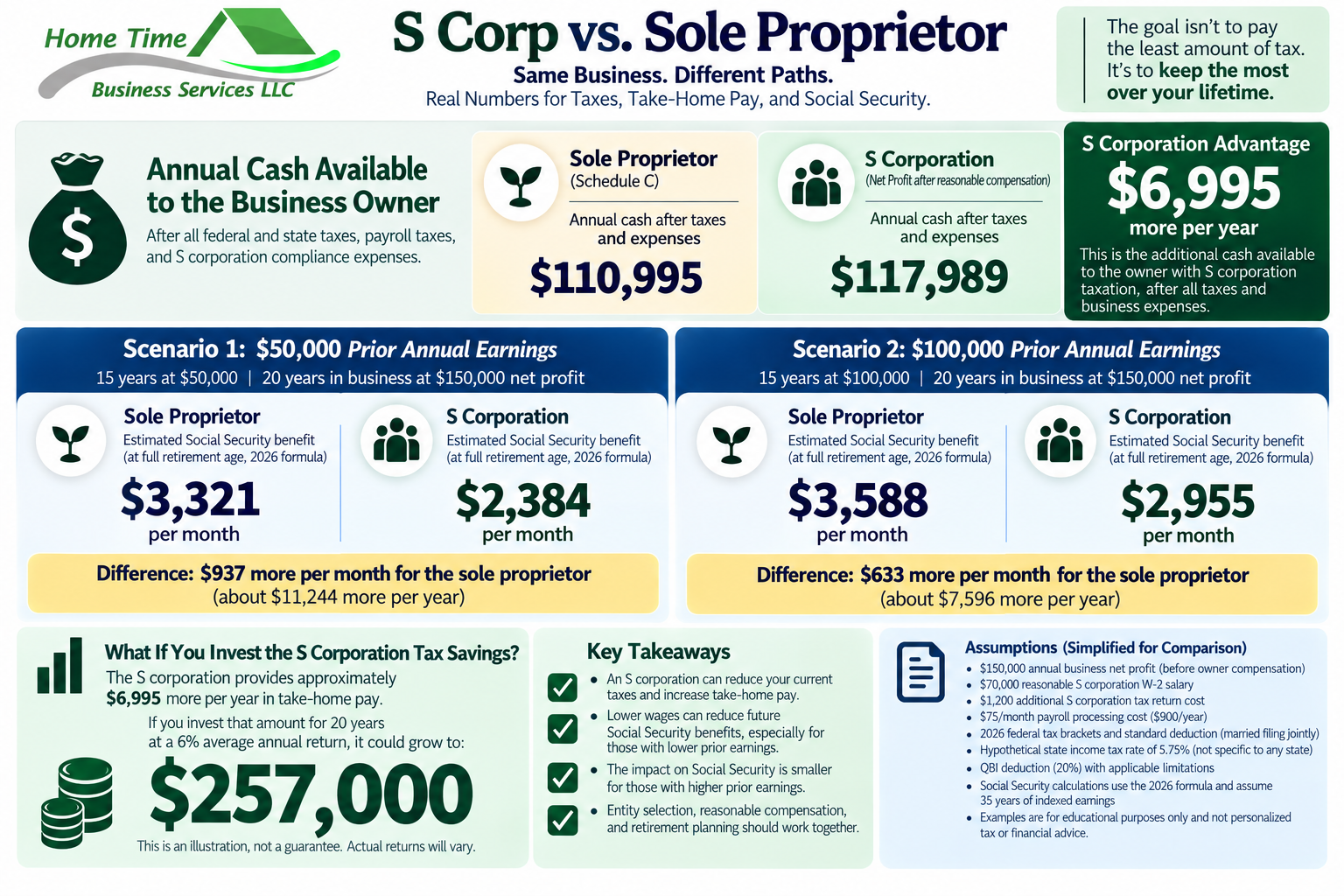
For more context, read our earlier articles: S Corp vs. Sole Proprietor: Social Security and Retirement and Your Tax Strategy Saved You $7,000. Now What?
At Home Time Business Services, we help business owners connect tax decisions with the bigger picture. Your compensation deserves more than a guess.
Your Next Step
Do you know why your S corporation salary is what it is—and could you explain that decision with documentation?
If not, a reasonable compensation review may be a smart place to start. Schedule a Right Fit Call with Home Time Business Services.
IRS References
- IRS — S Corporation Compensation and Medical Insurance Issues
- IRS — S Corporation Employees, Shareholders and Corporate Officers
- IRS — Retirement Plan FAQ for S Corporation Shareholders
Educational disclaimer: Educational information only. Reasonable compensation depends on facts and circumstances. The examples are illustrative; there is no universal salary percentage or safe harbor. This article is not individualized tax or legal advice.
Tags: